A spacecraft robot can’t wait for a person to guide every move. Distance delays commands, radio links can drop, and a damaged arm may leave no one close enough to repair it. This article looks at the design choices that will decide if autonomous spacecraft robots can work beyond direct human control.
- Local decisions when contact is delayed
- Tools that can handle more than one repair
- Clear proof that the robot knows its own limits
Why autonomy matters in space
A robot near Earth can often rely on frequent commands and fresh images.
Farther from Earth, it has to work from an older view of its surroundings, so it must check each move before it acts.
That changes the job from moving a tool to managing risk. The robot needs to detect loose parts, unexpected resistance, blocked paths, and power limits before a small error turns into a lost task.
The system also needs a safe pause state. If its camera view becomes unclear or a force sensor reports a result outside its planned range, stopping may be better than guessing. A waiting robot can still receive new commands; a damaged one may not.
The robot needs a useful body
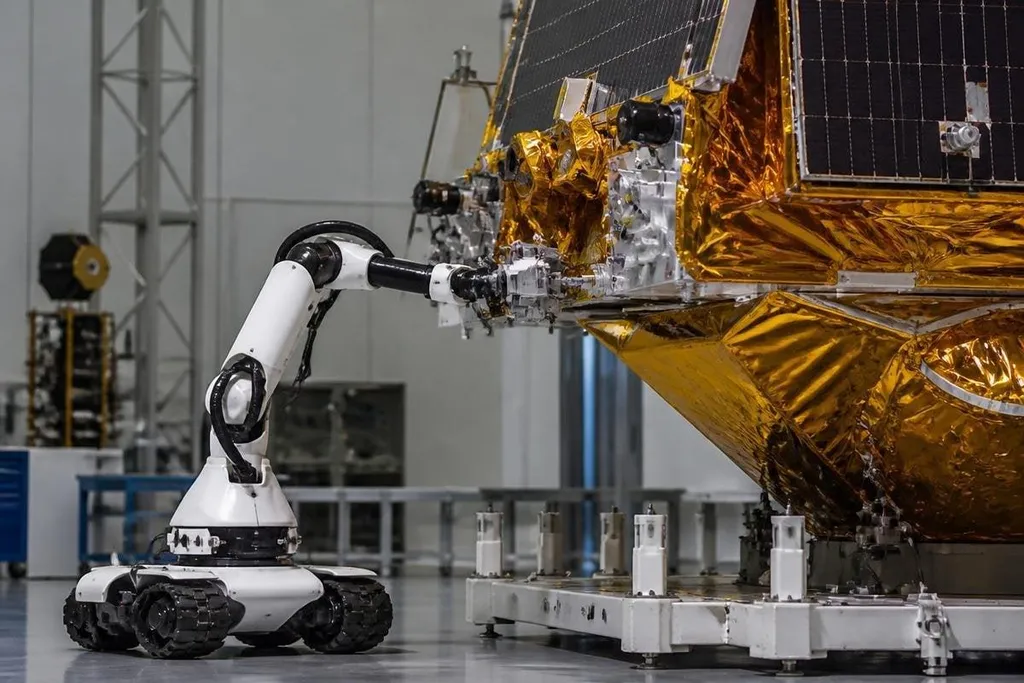
A spacecraft robot designed for inspection could carry cameras, lights, and sensors. A repair robot needs more: a way to hold parts, apply force, change tools, and keep its body steady while working.
That last part is easy to miss. A gripper can hold a bolt, but the robot also needs a reaction point. Without one, turning the bolt may push the robot away from the spacecraft instead of loosening the part.
Tool choice will shape the missions these robots can handle. A fixed tool may work well for one known repair, while a tool-changing system could cover more tasks but add moving parts, control steps, and failure points.
The robot’s software must understand the difference between contact and damage. A motor meeting resistance does not tell the system why the force appeared. The part may be tight, misaligned, bent, or already broken.
Software must show its work
Autonomy in space should mean more than a robot choosing its next motion. The system needs to record what it saw, what it expected, what changed, and why it stopped or continued.
That record gives ground teams a way to check a decision after the event. It also helps them send a better command instead of repeating the same failed step.
A command log means more when it shows which actions needed approval and which ran on their own. Robot24 reports can place those decisions beside named spacecraft, mission dates, and test results, giving you a way to judge the risk before the system acts near sensitive hardware.
A useful system should also separate low-risk actions from high-risk ones. Checking a camera view may need little approval. Cutting a cable, opening a sealed panel, or moving near a sensitive surface needs a much higher bar.
I'd back autonomy that can explain a stop more readily than autonomy that claims it can finish every task.
The hard limits are physical
Power remains a design limit. A robot that spends too much energy holding position may have too little left for the repair itself. Heat, radiation, dust, and wear can also change how sensors and motors behave over time.
Communication has a second effect beyond delay: people on the ground may see only selected data when the link is limited. The robot must choose which images, sensor readings, and event records deserve transmission first.
Training is another open problem. A system can learn from planned tasks and simulated faults, but space hardware may face a combination that was absent from its training data. That is why safe recovery steps matter as much as fast task execution.
A buying and design checklist
Before funding a spacecraft robot project, ask:
- Task scope: Can the robot name the repairs it is built to perform?
- Failure response: Does it stop safely when its sensors disagree?
- Tool plan: Can the robot hold, change, and secure the tools the task needs?
- Human control: Can ground teams approve risky steps without guiding every motion?
- Proof record: Does each test show the robot’s view, force readings, commands, and result?
A project that cannot answer these points has a concept, not a working plan. The next useful demonstration will be a robot handling an unplanned fault, recording why it paused, and recovering without a person steering each movement.